Search this question online and you’ll find a confident-sounding number — usually 7, sometimes 5. The honest answer is less tidy: age is a weak predictor of readiness on its own. Two useful signals matter far more.
Signal one: can they follow a multi-step instruction?
Coding, at its core, is giving a sequence of precise instructions and understanding what happens when that sequence runs. A child who can follow “put on your shoes, then get your bag, then wait by the door” — in that order, without needing each step repeated — already has the basic sequencing skill coding builds on.
This tends to show up somewhere between ages 5 and 7 for most children, which is why that range gets quoted so often. But it’s a real skill being measured, not a birthday.
Signal two: can they tolerate getting it wrong?
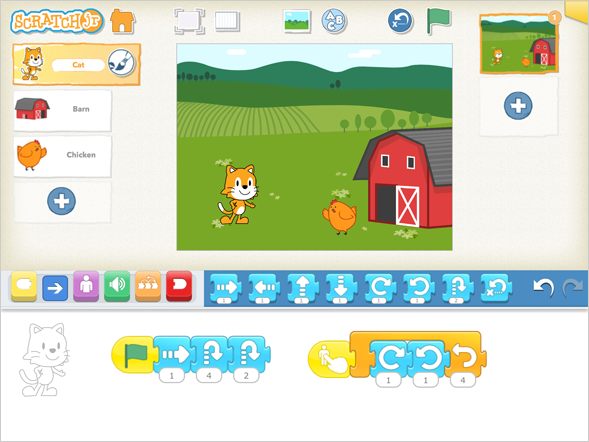
This one matters more than people expect. Code rarely works the first time — for anyone, at any level. A child who melts down the moment their Scratch character doesn’t move the way they expected will struggle, not because they lack ability, but because the emotional part of learning to code (try, fail, adjust, try again) hasn’t developed yet.
This is often a maturity signal rather than an intelligence one, and it can vary a lot between two children of the same age.
What “starting early” actually looks like in practice
Starting early doesn’t mean typing code at age 6. It means visual, block-based logic — Scratch, not Python — where the “coding” is really about sequencing and cause-and-effect, dressed up as something that feels like play. NOVA’s own youngest track, Junior Computer Academy (6–9), is built around exactly this: a child isn’t expected to read syntax, they’re expected to understand why their character moved, jumped, or didn’t.
What if you’ve missed the “ideal” window?
You haven’t. There isn’t a cutoff after which coding becomes harder to pick up — if anything, an 11-year-old starting from zero often moves through fundamentals faster than a 6-year-old would, because more of the underlying logic and reading ability is already in place. Junior Computer Academy (10–15) is built for exactly this: a genuine starting point for a total beginner, not a track that assumes years of prior experience.
The honest bottom line
If your child can follow a short multi-step instruction and doesn’t fall apart when something doesn’t work the first time, they’re ready — whether that’s age 6 or age 13. The class and pace should adjust to where your child actually is, not to a number on a chart.